With its goal of achieving climate neutrality by 2035, the City of Munich (Landeshauptstadt München, LHM) has set ambitious energy performance standards. A key instrument for achieving these objectives is the preparation of energy concepts, coordinated with the Department of Climate and Environmental Protection (RKU) and the Department of Urban Planning and Building Regulations (PLAN). These concepts are mandatory as part of local development planning procedures.
Energy concepts provide clarity on a neighbourhood’s energy-related parameters at an early stage. They serve as a sound basis for decisions concerning long-term, climate-compatible neighbourhood and urban development while also providing formal evidence of compliance with the City of Munich’s climate targets.
For developers, this means that energy-related considerations become key decision-making factors as early as the local development plan stage. Müller-BBM Building Solutions prepares such energy concepts and advises developers on the structured assessment of complex requirements, enabling robust decisions and the delivery of future-ready neighbourhoods that are economically viable and have a sound basis for obtaining the necessary approvals.
The purpose of an energy concept is to demonstrate that a climate-neutral heat supply is achievable in principle for a new development or planned neighbourhood, that its solar potential can be fully utilised in accordance with the “Solar Munich” Master Plan, and that the development supports the City of Munich’s overarching climate targets.
To this end, useful, final and primary energy demand are calculated, and several heat supply options are developed and assessed comparatively. The required photovoltaic areas within the neighbourhood are also determined, and operational greenhouse gas emissions are calculated. Technical coordination with RKU and PLAN ensures that assumptions, benchmarks and emissions pathways are applied consistently with municipal requirements.
The energy concept is intentionally prepared before the detailed engineering design of the energy systems. This allows key decisions to be made at an early stage of the planning process while giving developers a transparent understanding of the implications for costs, spatial requirements and approval-related risks.
The first step is to identify potential climate-neutral heat supply solutions for the neighbourhood concerned. Regulatory and site-specific conditions, such as the availability of district heating, groundwater or geothermal resources, have a significant influence on the selection of suitable options.
The City of Munich’s municipal heat plan generally provides an initial point of reference. Several appropriate options are then examined in greater detail together with the planning team and with due consideration of the developer’s project-specific objectives.
In one project supported by our team, for example, a groundwater heat-pump solution was compared with district heating, together with different thermal insulation standards, because deep geothermal energy was not available at the site.
The studies showed that the heat-pump option initially performs best in terms of greenhouse gas emissions. Over the period to 2050, however, the assessed options converge significantly. This trend can be attributed to the increasing proportion of climate-compatible deep geothermal energy in the overall district heating network operated by Stadtwerke München (SWM).
The assessment therefore demonstrated transparently how the selection of a particular supply option affects long-term emissions and energy performance indicators, as well as how the influence of the energy system compares with that of the thermal insulation standard.
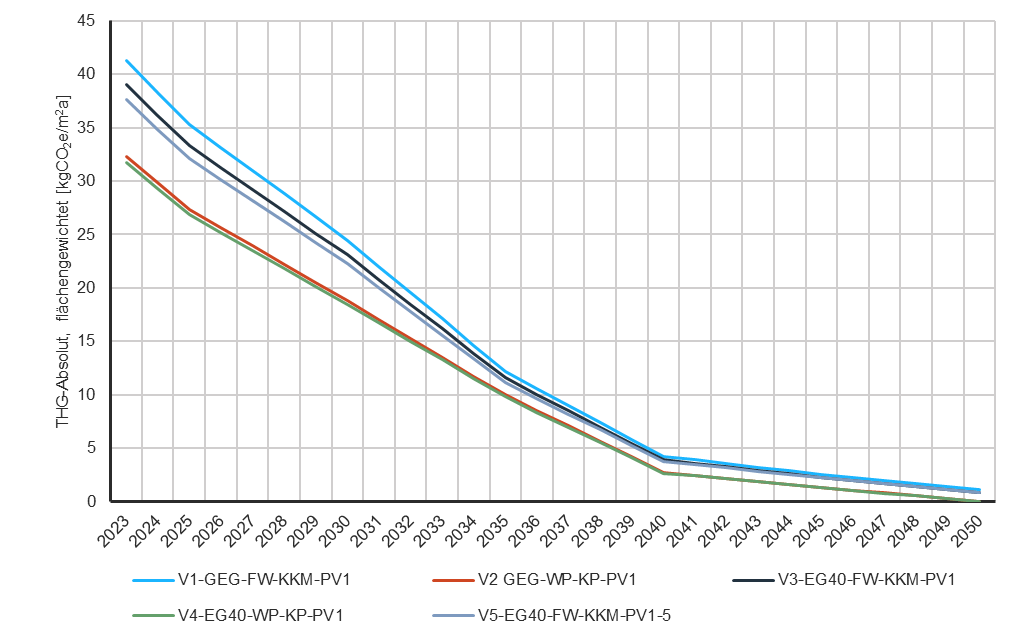
Time series (2024–2050) of absolute greenhouse gas emissions associated with heating and electricity demand, area-weighted and expressed annually in (kg CO₂e)/(m²·a), based on the RKU emissions pathways.
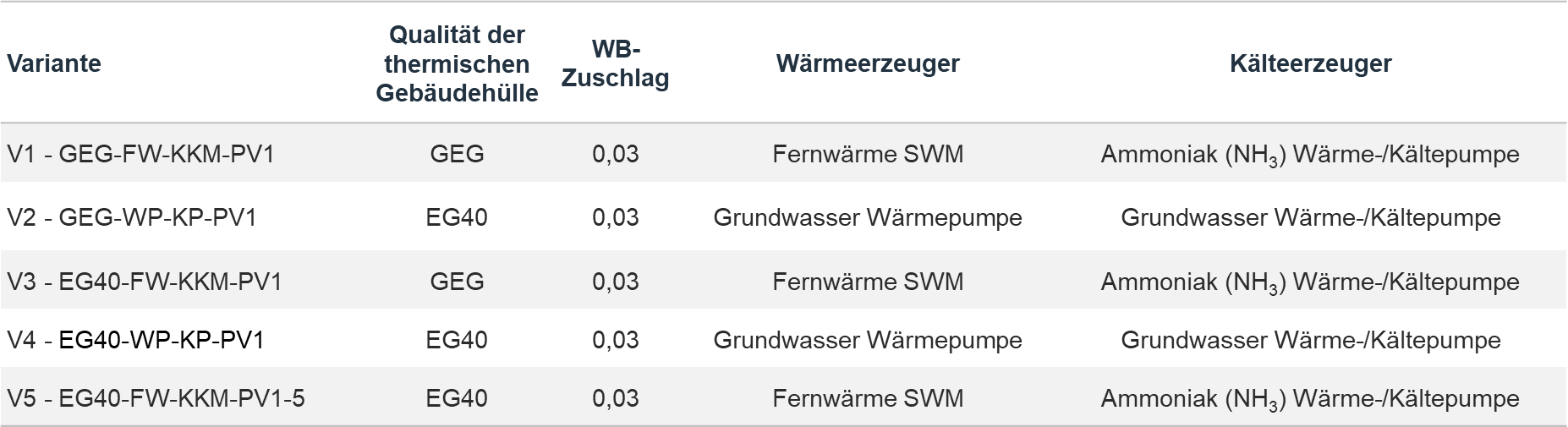
Options assessed in an energy concept supported by Müller-BBM Building Solutions GmbH.
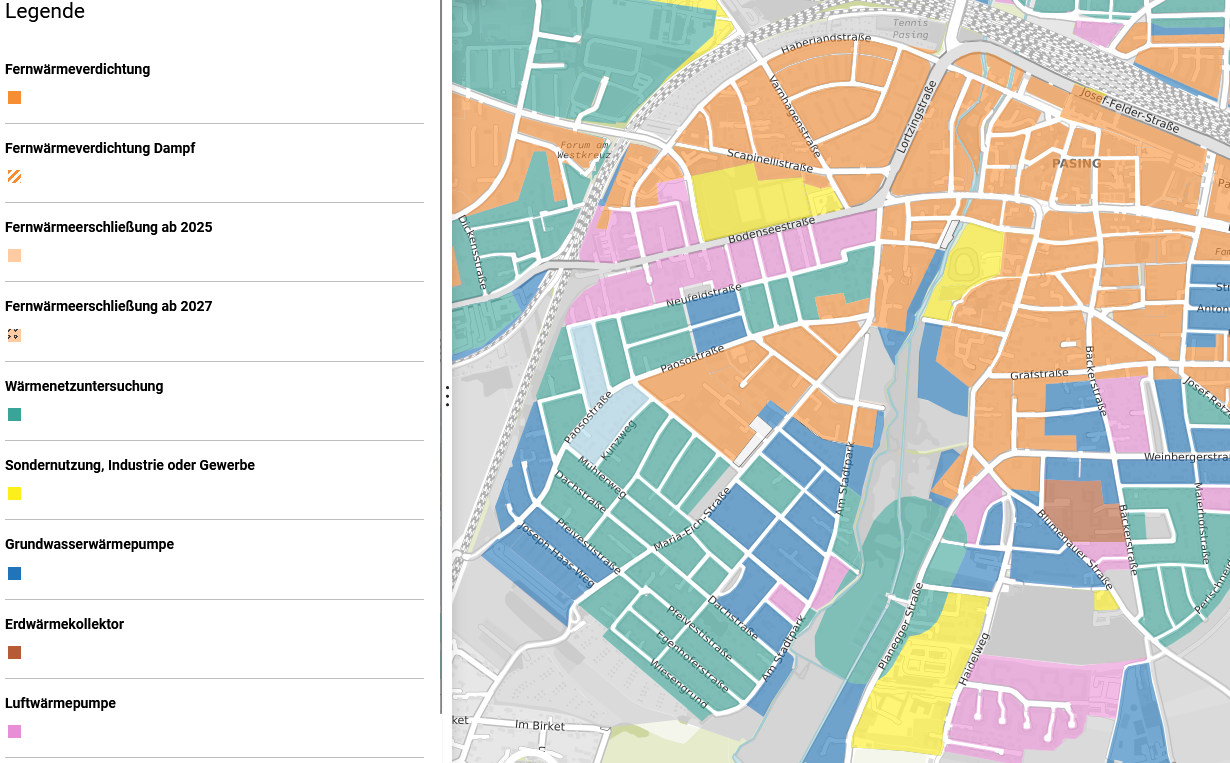
Data source: dl-de/by-2-0: City of Munich – Municipal Department – Geodata Service; map extract from the Munich GeoPortal – Municipal Heat Planning. Accessed 18 May 2026, geoportal.muenchen.de/portal/waermeplan
The “Solar Munich” Master Plan was adopted by the City Council in 2023. Its long-term objective is for photovoltaic systems within the city to generate electricity equivalent to 25% of Munich’s electricity demand. For settlement areas comprising residential, industrial and commercial land, PV area equivalent to 20% of the total plot area is defined as a benchmark.
This long-term municipal objective is applied directly to project-specific energy concepts, resulting in a corresponding target of meeting 25% of the neighbourhood’s calculated total electricity demand with photovoltaic power. Based on our project experience, it is useful—and may be necessary—to develop alternative, project-specific approaches to these targets in coordination with RKU and PLAN. The following scenarios have proved effective for establishing the available potential and the required PV module areas:
In addition to roofs, façades, pergolas and ground-level open spaces are incorporated into the PV concept where necessary. In practice, roofs are frequently subject to considerable competition for space between amenity areas, greening, building services equipment and photovoltaic systems. The studies make these conflicting requirements transparent for the developer and provide robust strategies for their practical resolution.
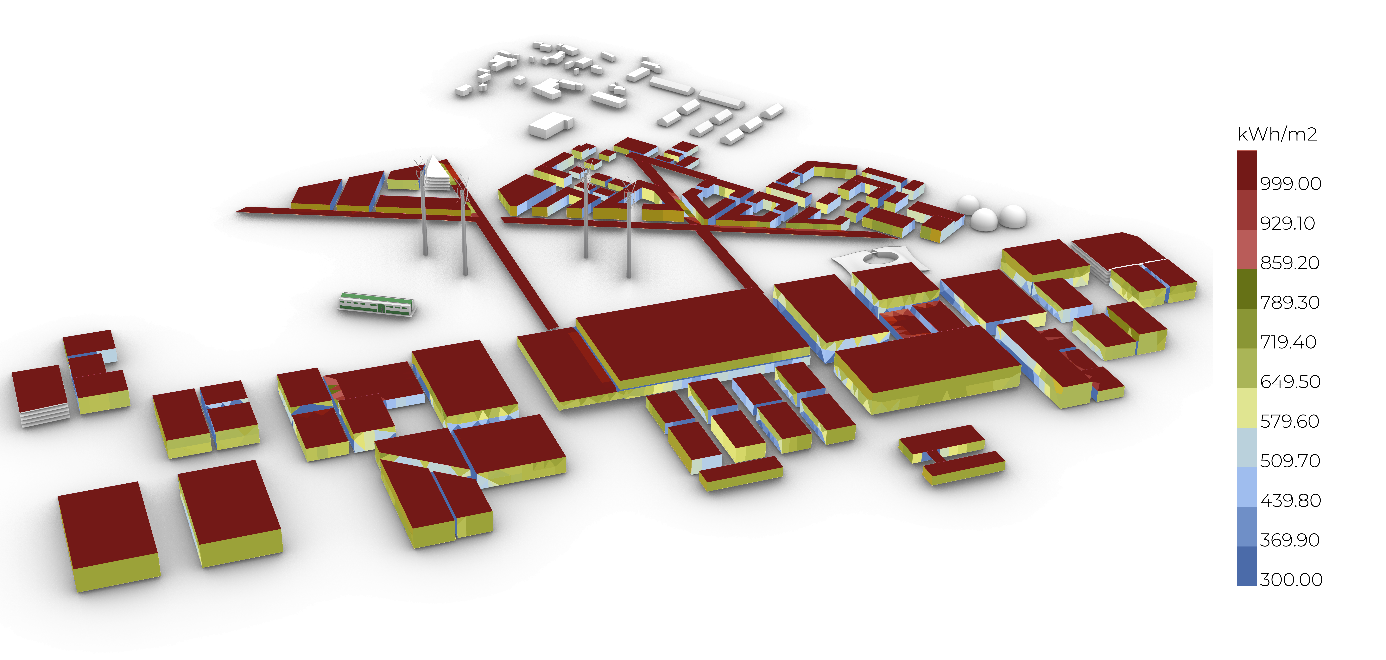
Identification of potential PV areas: annual solar potential across a neighbourhood.
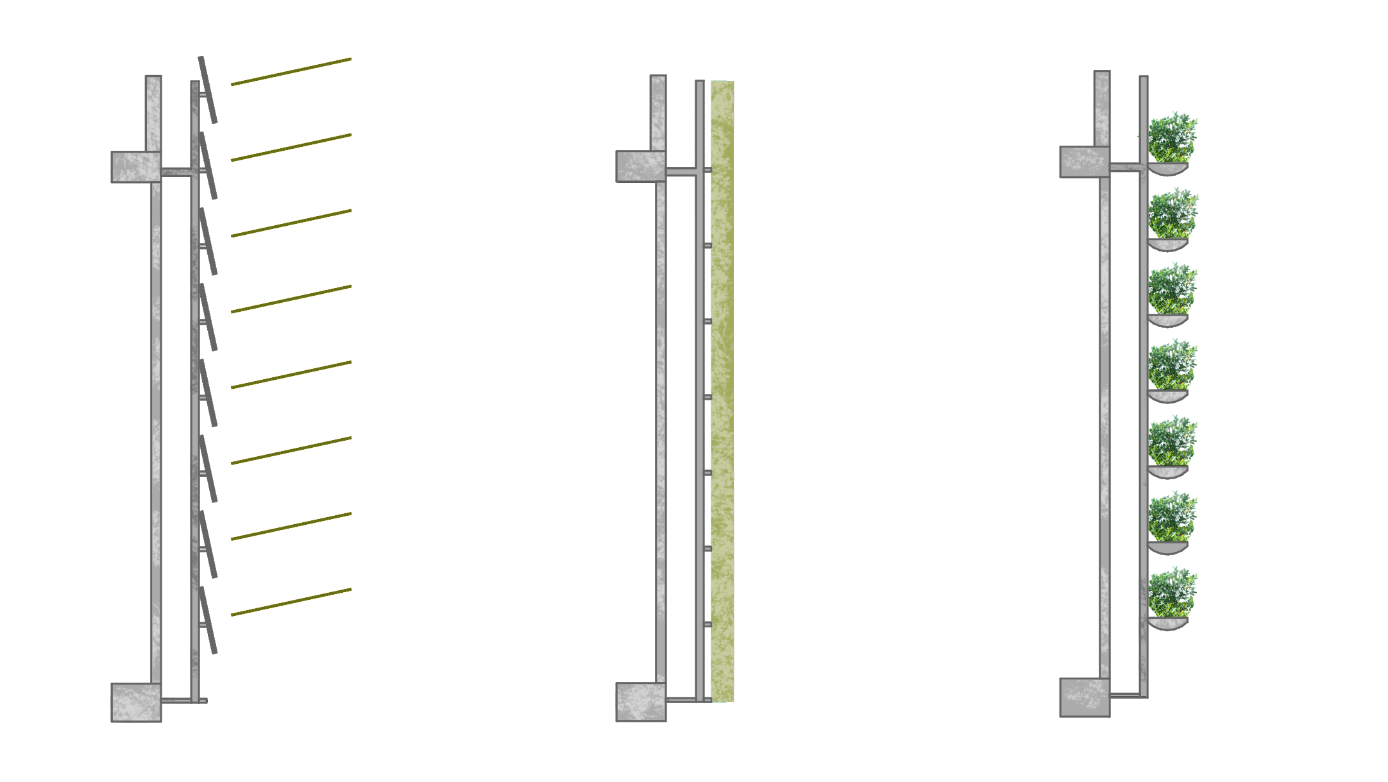
Competing façade requirements: electricity generation, daylight and façade greening.
The total electricity demand considered in the energy concept comprises electricity for building services, heat and cooling generation, occupant use and electric mobility. Standard benchmark values are used to determine these requirements (BBSR Studio, 2021), or project-specific values are defined where appropriate.
Within the local development planning process, we act as an intermediary between the requirements of the Department of Urban Planning and Building Regulations, the city’s energy objectives and the interests of developers. Drawing on our extensive, long-standing experience, we can establish realistic assumptions and present the energy-related implications of planning provisions in a clear and transparent manner.
Our project experience shows that an integrated assessment of buildings, energy supply and mobility is required to achieve ambitious energy performance targets.
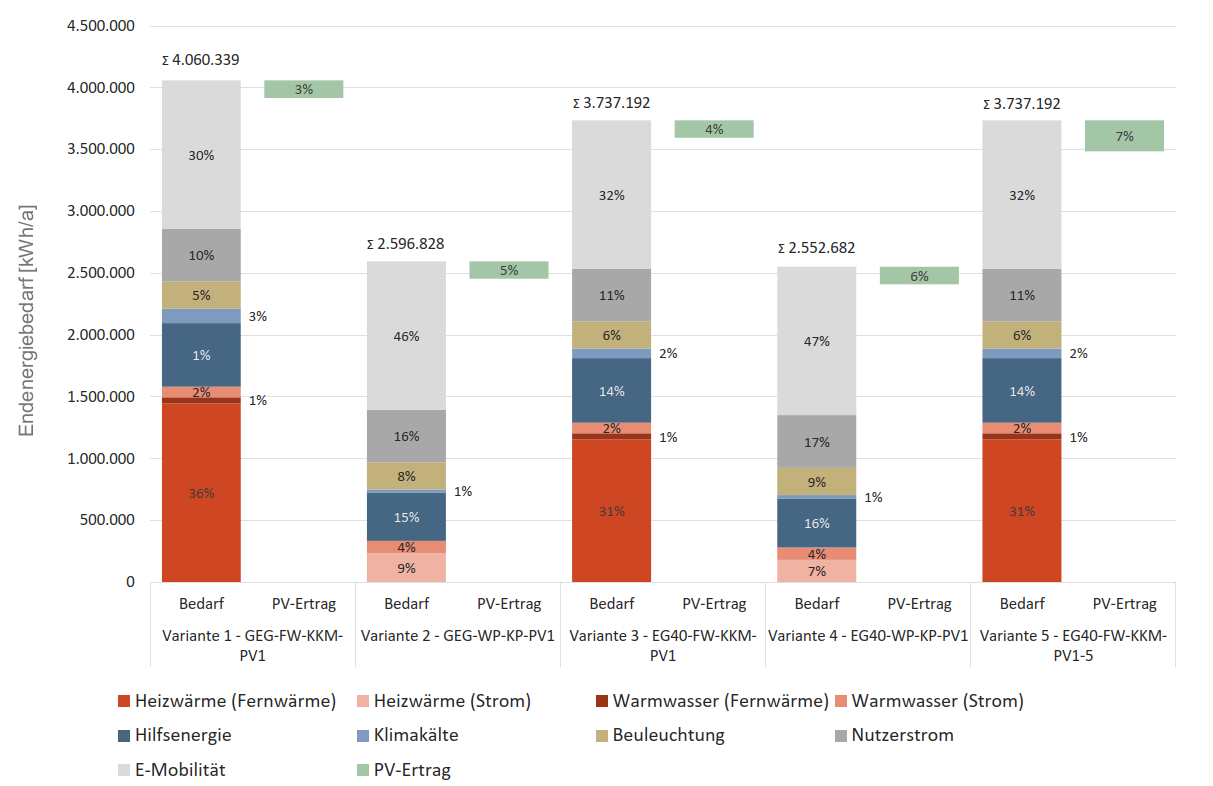
Breakdown of final energy demand across the assessed options.
Energy concepts prepared as part of local development planning procedures provide early clarity regarding a neighbourhood’s energy-related parameters and realistic scope for action. Their principal value lies in the structured comparison of options and the transparent assessment of energy demand, emissions and solar potential at local development plan level.
As an early strategic framework, energy concepts demonstrate how robust, long-term energy supply solutions can be developed for new neighbourhoods. They identify the key levers for reducing emissions as well as the associated planning and approval constraints. By deliberately positioning the energy concept before the detailed technical design stage, target levels, boundary conditions and development pathways can be defined without pre-empting subsequent design decisions.
Our studies and consultancy services relating to energy concepts within the local development planning process therefore provide an essential tool for delivering future-ready, resource-efficient neighbourhoods.
Levin Kümmerle – levin.kuemmerle@mbbm-bso.com
Stefan Limmer – stefan.limmer@mbbm-bso.com
Stefan Schierer – stefan.schierer@mbbm-bso.com
Consulting Engineers
Müller-BBM Building Solutions | Munich and Augsburg Offices
In this article: Energy concepts for Munich neighbourhoods – heat supply, solar PV and energy demand within the local development planning process